
Carlos Yescas, program director of Oldways Cheese Coalition
www.oldwayscheese.org
Boston, MA
What do you think National Cheese Purchase Sacrifice Day means?
My approach in life, when it comes to cheese, is moderation is important. But moderation also means you are eating full-flavor cheese. This is why raw milk cheeses are so much better, they have so much more flavor compared to pasteurized varieties. When something has a lot of flavor, you’ll end up eating less, hence moderation.
To me, National Cheese Purchase Sacrifice Day means that instead of not buying cheese, buy better cheese. Sacrifice your purchasing of lesser quality cheeses, and celebrate with the really good stuff.
What is raw milk cheese? Why is it hard to get in the USA?
Since cheese was first discovered many millennia ago, it has been made with pure raw milk. In fact, it was only in the last century that cheese made with pasteurized milk became commonplace, despite raw milk cheese’s reputation for quality and flavor.
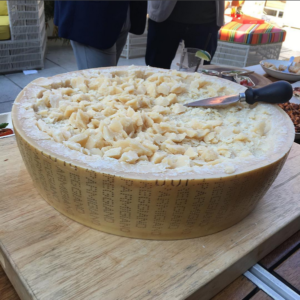
Today, less than 1/10 of cheese sold commercially is produced with raw milk, but that 1/10 includes some of the most famous cheeses in the world — like Le Gruyere AOP, Parmigiano-Reggiano, Grafton Village raw milk cheddar, Comte, and many American artisan cheeses.
Raw milk cheese has not been heat-treated, which means it retains the naturally occurring enzymes that lend milk so much of its wonderful flavor. Raw milk, and thus raw milk cheese, also contains microflora, which is expressive of terroir, evocative of complex flavors and beneficial to health.
Due to misconceptions and regulatory hostility toward raw milk cheese, this traditional and healthy dairy product has been under threat in the U.S. for years. The Oldways Cheese Coalition (OCC) started in 1999 in response to the possibility that U.S. officials would ban raw milk cheese outright, and we have been working ever since to preserve and advocate for raw milk and other traditional cheeses.
What are some new trends in cheese?
The talk of the town right now is collaborations between different producers, farmers, and stores. For example, producers that normally make cheese from sheep’s milk are now collaborating with producers that use cow’s milk. This is very new and exciting. One of the interesting collaborations is between three different cheesemakers — they decided to make a new style of cheese, a goat cheddar. This type of collaboration has never been done before. And the goat cheddar is amazing. It’s called Trivium.
What’s your favorite serving options for cheese?
I like to keep it simple. While I’m cooking dinner, I’ll also eat some cheese with bread. That way, I end up eating less cheese and bread (because I’m busy cooking), and I’m not starving by the time dinner is done, so I don’t tend to overeat dinner. Again, moderation.
Really nice cheese can be expensive, but it’s worth it. If you buy small amounts of high quality cheese, you’re less worried that you’re not going to like it. Plus you get to try out more varieties. I recommend buying a few different types in smaller portions, and then picking a partner for each cheese — perhaps some crackers, fruits, or nuts — so there’s variety on your plate, and something for everyone’s palate.
What are some tips you would give to someone who doesn’t know too much about cheese?
Don’t get overwhelmed by all the options, and don’t be afraid to try something new. Find a good local cheese shop with an expert that can help you find the perfect cheeses for your tastes. And follow on social media the Oldways Cheese Coalition for more cheese knowledge.
What are the health benefits of cheese?
Scientific studies reveal that, when consumed in moderation, cheese is a delicious way to add healthy fats, minerals, vitamins, and probiotics to your diet. We all know cheese is an abundant source of calcium and protein. Now, recent studies indicate that the saturated fats in dairy may be different from other saturated fats — and may even reduce the risk of diabetes. Small portions of quality, artisan cheeses have been savored for thousands of years as part of traditional diets around the world.
Because cheese is a fermented food (like wine, beer, bread, sauerkraut, to name a few), it’s made by a complex interaction between raw ingredients and the ambient microbes in our environment. The good bacteria in cheese ensures that the product remains safe to consume by out-competing undesirable pathogens. In fact, before the days of refrigeration and pasteurization, cheese was made to preserve raw milk via natural fermentation.
Not only is raw-milk cheese safe to eat, it is delicious and nutritious. Ambient bacteria in raw milk, and other microflora present in dairy before heat-treatment, lend a great deal of flavor to the final product that is all but eliminated when the milk is “cooked.” What’s more, there is an expanding body of scientific literature that suggests that food rich in probiotics (i.e. cheese, yogurt, and other fermented foods) are really quite healthy, providing essential vitamins and minerals and potentially helpful with respect to allergies, asthma, and a host of other health concerns.
How can someone store cheese to make it last longer?
Only plan to store cheese for two weeks, at most, otherwise the flavor will start changing. Ideally you want to store cheese in cheese paper (which you can get at your local cheese shop or online), but if you don’t have any on hand you can use wrap parchment paper around the cheese. Store in a clean vegetable crisper. Most cheeses can be stored in the same refrigerator drawer, except blue cheese — keep the blues separate from the rest of the herd. And above all else, never EVER freeze your cheese
Te invito a leer sobre #quesomexicano - una guía de regiones y estilos mas característicos: https://t.co/5fCsYmXhP1 pic.twitter.com/4gRVpFOPmJ
— Carlos Yescas (@CarlosYescas) January 17, 2016
Vermont selection #cheese #acs2016 pic.twitter.com/a2TGE9Nv1r
— Carlos Yescas (@CarlosYescas) July 28, 2016
There has been a critical error on your website.<\/p>
Learn more about debugging in WordPress.<\/a><\/p>","data":{"status":500},"additional_errors":[]}